
Pre-Order Status Communication for Shopify Brands
Pre-orders collapse when customers feel forgotten. Here is how to keep buyers calm and confident during the long wait before the item ships.
Pre-orders are won and lost in the silence
A pre-order is a strange kind of purchase. The customer has paid for something that does not exist yet. They have accepted a wait that might last weeks or months. And during that entire window, the only reassurance they have is whatever you choose to tell them.
Most refund requests on pre-orders do not come from customers who changed their mind. They come from customers who stopped believing the order was real.
The default Shopify flow was not built for this
For an in-stock product, "order received" and "shipped" are close together. For a pre-order, they can be separated by ninety days or more. Leaving the order page on "processing" for that entire stretch is the single fastest way to turn a confident buyer into a nervous one.
The longer the wait, the more the order page has to do. It is no longer a receipt. It is the ongoing proof that the commitment is still on track.
Set the expectation at the moment of purchase
Pre-order communication starts before the customer ever opens the order page. The product page and checkout should make the wait obvious and specific.
"Ships in June" is stronger than "Pre-order now." "Ships the week of June 15" is stronger still. The more concrete the expected date, the less room there is for the customer to invent their own.
Repeat that date in the order confirmation email. Repeat it on the order status page. Repeat it in every subsequent notification. Consistency over ninety days is more valuable than any individual message.
Break the wait into visible stages
Ninety days of silence feels abandoned. Ninety days of progress feels managed. The content of the updates matters less than the fact that something is visibly moving.
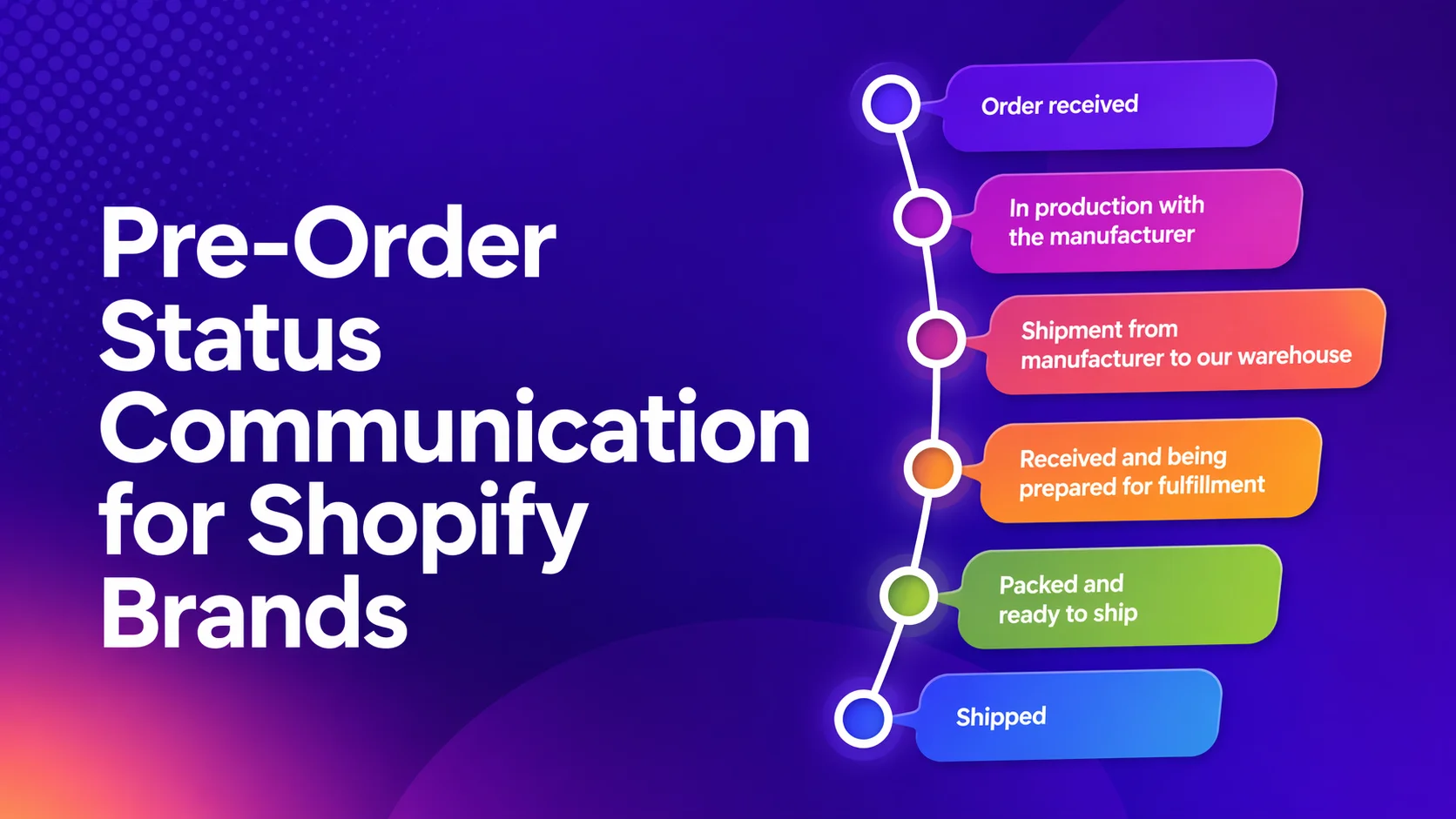
A useful pre-order status flow usually includes:
- Order received
- In production with the manufacturer
- Shipment from manufacturer to our warehouse
- Received and being prepared for fulfillment
- Packed and ready to ship
- Shipped
Each of these can last weeks. That is fine. What matters is that the customer can see the next stage ahead of them instead of a vague wall.
Be specific when the date changes
Pre-order timelines slip. It is part of the category. The brands that handle slippage well share one habit: they tell the customer early, directly, and with a new specific date.
"We are updating the ship window from June to early July because of a supplier delay" is almost always accepted. Silence followed by "shipping soon" almost never is.
If the update includes a reason the customer can understand, the tolerance goes up sharply. Customers are far more forgiving of a delayed component shipment than a vague operational excuse.
Give the customer a way to feel ownership during the wait
The best pre-order experiences turn the wait into anticipation instead of anxiety. A short note when production begins, a photo when the first units arrive at the warehouse, a heads-up the week before shipping. None of these are required, but they all change the emotional shape of the wait.
The order page should feel less like a tracking screen and more like a slow-motion story the customer is part of.
Have a clear refund stance and state it early
Long pre-order windows attract buyers' remorse. A clearly stated refund policy on the product page, reinforced in the confirmation email, prevents the worst version of that outcome: the customer who wants out and cannot figure out how to ask.
Brands that hide their pre-order refund policy do not get fewer refunds. They get more angry support tickets.
Send a different shipment notification than a regular order
The moment a pre-order actually ships is emotionally huge for the customer. Treat it that way. A standard "your order has shipped" email is under-celebrating a moment the customer has been waiting on for months.
A short, specific note that acknowledges the wait and confirms the dispatch almost always outperforms the generic template. This is the notification the customer has been refreshing their inbox for.
Final takeaway
Pre-orders are not just a logistics challenge. They are a trust exercise stretched across a long timeline. The brands that win in this category are the ones that treat every week of the wait as a chance to reinforce the commitment the customer already made.
StatusPro helps Shopify brands build pre-order specific statuses and branded notifications that keep customers confident from the day they buy to the day the product ships.